blog photos radio ihih projects me

Here’s a website that somebody should build:

  • You register. You enter a bunch of bands that you like.
  • The site scrapes the websites of bands looking for what looks like tour dates and builds a calendar of who will be where when.
  • When that database indicates that one of your listed bands is coming to your town, it emails you to let you know.

How many times have I gone to a band’s website and found out they were in town 5 weeks ago? I don’t have the energy to search down the website of every band I like in case they’ve posted some tour dates lately.

Or is that all too web 1.0? Maybe people can enter their own recommendations for other websites that do the same thing better, or upload pictures of themselves using the website or something.

Challenge: any such aggregator would have to be able to access and interpret the artsy-horrible flashblobs that pass for websites for so many bands (click on the unlabeled red bird-silhouette in the corner, against the purple background, to see photos! Click on the black circle in the lower left for 20 seconds of abstract animation and the band’s bio!). Perhaps if somebody did start such a service, and more people knew to attend shows for the bands whose websites were standards-compliant text based and hence more easily parsed for tour-date-scraping, then it would encourage bands to build sane websites also operable by mere humans.

I got excited when I saw that Janelle Monae’s website had been massively overhauled, and featured an “In Stores August 12, 2008!” teaser. I’ve been waiting hard on the second installment of the Metropolis Suite for what feels like a very long time now.

But apparently what hit the stores in August was Metropolis Suite 1: The Chase. Which is the same album I was playing last year this time. Literally, in fact, I believe I played the entire album through start to finish while subbing a late-night show last year. Not that I was being edgy or prescient by doing so, “Violet Stars Happy Hunting” was already an established thing on the college circuit when I got hooked on it. And as for blowing up “Many Moons” (video premier tonight!), dude, I totally rocked that solo on my show like last week.

Janelle, I love you, but you need to step up your release schedule to where it’s not a year behind my sorry grasp on the zeitgeist. I’m guessing this is a major-label release of what had previously been indie-distribution-only. Don’t get bogged down defining yourself by when your music is in Wal*Mart. Great if they carry your music in their commodity-distribution way, but don’t pretend that your official release happens when it hits their beige and dusty shelves. What matters as far as ritual and event is the indie or even the network release. When you’ve released to the internet, your music is released. You may afford less zircon-encrusted hummers thinking that way, but you will be cooler. And ask yourself: when you are on your death-bed, which will seem more important?

Tomorrow is One Web Day. Is there anything more dorkotopian than One Web Day? I doubt it, so you know I’ll be there.

Turns out OWD is led by Susan Crawford, who is law faculty at U Michigan. Anybody heard of any meatspace OWD events in Ann Arbor?

By the time you read this, Google will probably have released the first public beta of their new web browser. (You can read about it in this comic. Nobody ever said Google wasn’t smart, and commissioning a comic book from Scott McCloud is a brilliant way of showing off their brilliance.) Looks like it will eventually be a great browser, a real competitor for Firefox. Kevin Newcomb makes the point that it will be the first browser built primarily for running web-based-applications (email, document editing, photo editing…) rather than just being a webpage displayer that can be cajoled into front-ending such applications. He makes the further point that by building such a browser, Google is setting itself up as author of the de facto standard for future web applications. And we are all told again and again that web applications are the future of personal computing.

Here’s another of Kevin’s points:

“As with the Google Toolbar before it, Chrome will also present an opportunity for Google to collect more user behavioral data. On the plus side, that could help Google develop better Web analytics applications. More cynically, Google can also take this mountain of user data and use it to better monetize its ad platforms.”

To which I would add that anybody vacuuming up that much information about people is just a bad thing for privacy.

This seems like a good time for a how-to turn off Google’s Search History “feature”. That’s the one that keeps track of everything you search for through Google and everywhere you go from Google. It lets them show a reminder in your search results of how many times you’ve been to a given page and when you last went there. It also lets them build a lasting profile of your online behaviour. It only happens if you have a Google account and have signed in to it recently. Personally, I use my account for Google Calendar, but lots of people have one for Gmail or Picasa or any of their many other services. I think they give you the option of turning Search History on or off when you first sign up for an account, but I don’t remember ever seeing that option, or at least not fully explained.

To turn off and wipe Google Search History:

  • Go to the google.com search screen.
  • If you aren’t signed in already, Sign In at the top right corner of the screen.
  • Go to www.google.com/history
  • . Hey, lookit all that stuff.

  • On the list on the left, click Remove Items.
  • On the right, click Clear entire Web History

That should have both cleared out Google’s history of your browsing, and “paused” the saving of future browsing. You can, of course, turn it all back on again if you want.

Here’s a video of Danny O’Brien convincing you not to put your data in cloud computing services, like 3rd party email, web document editors, photo hosting sites, social networking sites, and the like. He argues a) why would you give your own data, including your most personal data, to an anonymous corporate mediator to store in any case and b) we can probably get the same always-on effortless sharing and still store our data on our own boxes through the magic of technology. The video is terrible. But the idea seems awfully good.

And here’s a guy who makes heavy use of Google’s online services, such as Picasa and Google Docs and Gmail, who has been suddenly, silently and inexplicably shut out of the Google cloud.

I’ve decided to start spelling Google with a capital G again, to remind myself that Google and Google services are not randomly beneficent forces of nature. Google is a company, and it lives a corporate life. Is that (or Yahoo, or Facebook or whomever) the cloud where you want to keep all your stuff?

I’ve just finished upgrading hughstimson.org to the latest wordpress release. All functions appear to be nominal, but if you come across any bugs please let me know via comment or email.

I should link to muxtape, in part to celebrate it’s brilliantness as the best-yet incarnation of a potent concept, in part in appreciation for it’s effective design (design in the good sense) and in part to remind myself to make better use of it in the few remaining days I have umbilically ubiquitous internet connectivity.

From Wikipedia’s article on the Lincoln Bedroom:

“A holograph copy of the Gettysburg Address is displayed on the desk. This copy is the only one of five that is signed, dated, and titled by Lincoln.”

What are the implications?

Thing 1: In this episode of the CBC radio show Search Engine, they discuss the tens of thousands of “Chinese gold farmers” who “play” online video games to generate virtual gold to sell to western gamers for real cash. They are crammed dozens to an apartment, rotating between the computers and the sleeping mats in 12 hour shifts, playing the same game, killing the same respawning monsters, all day every day. Apparently it’s a thing that they don’t wear shirts. I’d rather do repetitive manual labour. What blew my mind was the researcher who claimed that in his interviews, some of the farmers claimed that they spend their off-hours… playing the same video games. I guess it’s the world they relate to.

There’s also a documentary in production about gold farmers, and a Cory Doctorow short story about a UK gamer who gets hired to raid online sweatshops to steal their gold and gets co-opted by an online labour organizer. And plenty of other exquisitely weird aspects.

Thing 2: Apparently V.S. Ramachandran was investigating the synesthesia phenomenon in which people experience certain colours in association with certain numbers, and had the smarty-pants idea to find a colour-blind number-synesthete. Colour-blind people’s experience of colour is limited by low-performing retinas, but there isn’t anything wrong with the colour-interpreting parts of their brains so, what happens when they see the number-induced colours? Turns out they see those colours (and only those colours!) as intensely as a normal person can perceive normal colour. The synesthete had the pet-term “martian colors” for them. Damn.

The S.O.S. Mathematics primer on matrix algebra leads off thusly:

Matrices and Determinants were discovered and developed in the eighteenth and nineteenth centuries. Initially, their development dealt with transformation of geometric objects and solution of systems of linear equations. Historically, the early emphasis was on the determinant, not the matrix. In modern treatments of linear algebra, matrices are considered first. We will not speculate much on this issue.

Looks like the Sea-to-Sky Freenet is finally getting a new website. I made the current/old one back in 2003, on a contract. I’ve written up that story in my projects page. Its fun to remember. Squamish was a good town, in its weird, pretty, grim way. That was a good stretch of life, in a weird, pretty, grim way. As part of the project, I put up a few old photos from Squampton.

paradise valley from tantalus

I keep thinking about this interview I read a while ago with Michael Crook. Crook is a urban tunneler. He explores the fringes of public space. The interview is mostly about sewers. He lives and explores in Toronto. The interview makes Toronto sing with life the way Michael Ondaatje’s books have. I doubt it’s coincidence that one of the named drainage systems he refers to is “the Skin of the Lion”.

Drains of Canada: An Interview with Michael Cook

I won’t try and pull any particular quotes out, the whole thing is amazing. And then there’s the photographs.

I haven’t spent much time on Michael’s website, Vanishing Point, but superficially it appears to be one of the best websites I’ve seen.

I’m a hardened boingboing.net addict. Sometimes I don’t even like visiting boingboing. It’s kind of like those people who live in lower mainland BC but are pissed off at the breathtaking scenery cause, like, what am I supposed to do about that?

Boingboing has just had a total site redesign. Ironically (?) I learned about the redesign from waxy.org’s RSS feed. It’s nice. I like it, although lots of people don’t seem to. Maybe the biggest deal is the return of comments. The boingboing gang of 4’s justification for turning comments off a few years ago was that they couldn’t effectively moderate them. So now they’ve hired somebody to do it. Who do you hire to moderate your comments if you are the most-visited blog on the internet, with a monthly readership approximately equal to Wired magazine’s and total monthly expenses of a few thousand in hosting fees? Teresa Nielsen Hayden apparently. Which is kind of like starting a new church and hiring god to play the organ. I imagine she’ll do well.

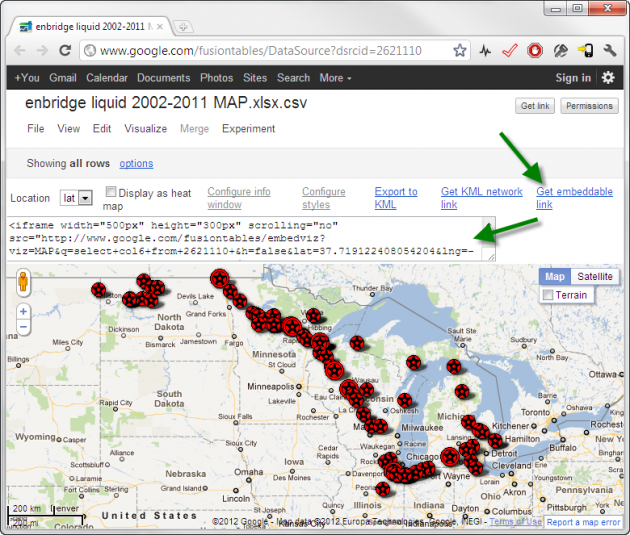
As part of my series of ‘quality blogposts I will eventually get around to writing’ (see also further notes on making websites from open source CMSs and comparing music player software), I’m working on some hows and whys to make embedded website maps using open source tools. Inevitably, this isn’t that. But I did come across this website and I figured it was worthy of a shout out:

OpenStreetMap

OpenStreetMap is a project aimed squarely at creating and providing free geographic data such as street maps to anyone who wants them. The project was started because most maps you think of as free actually have legal or technical restrictions on their use, holding back people from using them in creative, productive or unexpected ways.

Their mediawiki powered, cc-wiki licensed website is amateurish but that’s not necessarily a bad thing in my estimation. Sometimes amateur websites suffer from poor informational design, but this is one of the better I’ve seen. The “I want to see maps; get out of my way!” link square at the top of the front page may be a bit cute but it does the job. The ‘lolcat of awesomeness’ they hand out to special contributors may be way too cute but well, it does the job. The whole thing comes off as active, friendly, and telegraphs how to get deeper in, rather than intimidating the new visitor by suggesting how much deeper in you would have to go to figure anything much useful out.

lolcat of awesomeness, I'm afraid

And they’re an open-access street map project. How cool is that?

After damning Songbird with some markedly faint praise back there, I started to feel guilty. I should at least point out that Songbird’s stated central mission has always been “playing the internet”. Thats a cool idea, and one at which even the current preview-grade software is very successful. Loading a music blog webpage into your music player and playing it like an album or a playlist is actually a bit of a head-bender. Do it once and you might start convincing yourself that the songbird folks are on to something big.

For me it’s almost the ideal music exploration model. Music blogs are awesome, but they require your focused attention, whether each track is interesting to you or not. You have to download the songs one by one, and either download them all and queue them all up into your player, or else read over the musicblogger’s post about each of the them to choose which you’ll download. Then choose which you’ll delete. It’s a more natural experience to load the site into Songbird’s hybrid browser/player and leave it playing in the background, then read the report for just those songs that catch your attention. Songbird turns a static music blog into a dynamic experience that combines the best of music blogs with the best of radio… high quality music, chosen to a purpose and theme, with skipping and replaying and pausing, and commentary that is both comprehensive–every song is contextualized–and also optional if you aren’t interested in reading it for that song. I’m in in in.

There are also features for integration with online music stores and I believe streaming and network music sites, which is probably cool too. So let’s get this thing out of alpha and into beta or something.

Today I came across a reference to an article I wanted to read. For some reason, neither U Mich nor U Victoria’s libraries had electronic subscriptions to the journal it was in. So I actually went to the library, wandered around in the stacks, got lost, asked for directions, found the journal, took it to a copier, realized I didn’t have money on my card, walked to a bank machine, went into a store for smaller bills, went back to the university, discovered that the computer printing cards are different than the library copying cards, went to the desk, waited in line, bought a card, went back up to the photocopier, pressed the bound journal against the flashing glass, spun the alternately upside-down copied pages into the right direction, found a stapler and stapled it together. While I was doing all this I kept thinking “this is how I got every article I ever read in undergrad. crazy.”

I’m routinely irritated by the process of retrieving journal articles electronically. Despite the fact that the one thing researchers want you to do most is read their articles (as a very serious multiple-publication scientist I can attest to that), and despite the fact that journal articles are all tagged with a wealth of formalized metadata which should make it trivially easy to catalogue and search them (title author year keywords abstract journal volume page range) compared to most of the messy and ill-defined stuff floating around on the global networks, getting one’s hands on eprints is a huge pain. Search google scholar for keywords. Or, if you so dare, figure out your university’s tragically complicated keyword search system (choose from dropdown list of database topics, click boxes to indicate which of the meaninglessly named topic indexes you wish to search in. navigate powerfully unclever series of output screens. pray you haven’t missed any relevant journals.) Then, with full and complete citation in hand, return to school’s journal search screen. Enter exact journal name. Receive a dozen possible responses, with yours listed strangely towards the bottom. Click on it. Another window pops open allowing you to choose between accessing it electronically from your campus or some other campus. Click. Another window. Which archive would you like to access your article from? Click. Another window. Optionally you can front load the archive access with the year volume and number of the journal the article is in. But if you do, you will get the same results as if you didn’t. Click. This window shows the journal. You can try their puzzling search interface, but it’s usually just best to browse. Shuffle through all the open windows to find the one with original citation. Read the year. Click back to the ‘browse’ window. Enter the year. Switch back to the citation to find the volume. Back to the browse screen. Oh look! This journal sorts by page, not by volume. Back to the citation. Back to browse. Click on the page range. Goody, another window opens. Scan through the articles, hoping you did indeed choose the proper journal name when confronted with 12 of them. Yes, there is the article. Click on it. Another window opens asking if you want the article in text format, .tiff or .pdf. Gosh I just wonder. Click. Up pops a new window. But hey, there’s you article. Click save. Note that the default filename is an apparently random string of alphanumeric characters. Close the save window. Try to copy the article name. Discover the article is saved as an image and you don’ t have that option. Click save again. Type out the article and author names by moving the save window back and forth across the screen so that you can see the text you’re transcribing. Click OK. OK.

But I have to admit, as ridiculous a way of searching and saving explicitly catalogued and distributed files as that is, it still beats the sneaker net. And I was lucky I could find someone to give me change so I didn’t have to buy $20 worth of copy card. And on my way back up to the copiers I passed the card catalogue rack they keep on exhibit.

In life, I think, we sometimes make a certain strategic trade-off. We choose to invest our time either in action that will have an immediate and measurable effect, or in action which might, over time and indirectly, have broader consequence. A friend of mine who used to do monkey behavioural research is now studying to be a vet. She has chosen the immediate and mindful impact of fixing up a hurting animal over the diffuse and uncertain good she might do by increasing understanding of them as a species. I seem to have generally opted for leverage over traction, choosing a fairly theoretical approach to ecosystem study which I hope will benefit ecosystems, but I can’t immediately say how.

For the past couple weeks I’ve been working part time on this website for Reserva Los Cedros in Ecuador. It’s been a case of “if I had known how hard it was going to be I would’t have tried it”. But I’m glad I didn’t know. Because now that it’s done (!trumpets!) I figure I’ve done something with more than my usual amount of traction. Non-profit biological reserves need websites. They need websites to reassure potential volunteers that they really should go there and help out and pay a little room and board money into the kitty. I imagine they need websites so they look more substantial when engaged in the interminable diplomacy of convincing government departments to afford them protections against land development threats. They need them to reassure potential donors that they’re a good place to donate to. They just need them so they can look like they should be taken at least a little seriously.

And this reserve should get volunteers and protections and donations. It’s 17 000 acres of neotropical cloud forest. I don’t know much about biology, but I know that we’ve really just gotta hang on to what’s left. And thats a little bit of it down there. That might have a better chance now. Because I made the damn website.

So yeah I should have spent more of my time recently doing lit review and working towards my ecological research. But somehow I can’t feel bad about spending that time slaving away over a text editor trying to learn php scripting.

It’s not actually done, more sort of done enough. I’ll no doubt be sinking more hours into actually getting it done over the course of months. In any case, here it is:

reservaloscedros.org

Australia: Copyright ruling puts hyperlinking on notice.

“Mp3s4free was different in the sense that it actually catalogued MP3 files that were infringing copyright material - Google doesn’t do that,” she said.

“There is, however, action that is being taken against Google in other jurisdictions, and we’re awaiting that eagerly.”

Yeah, that’s going to be great.

Creative Commons License